
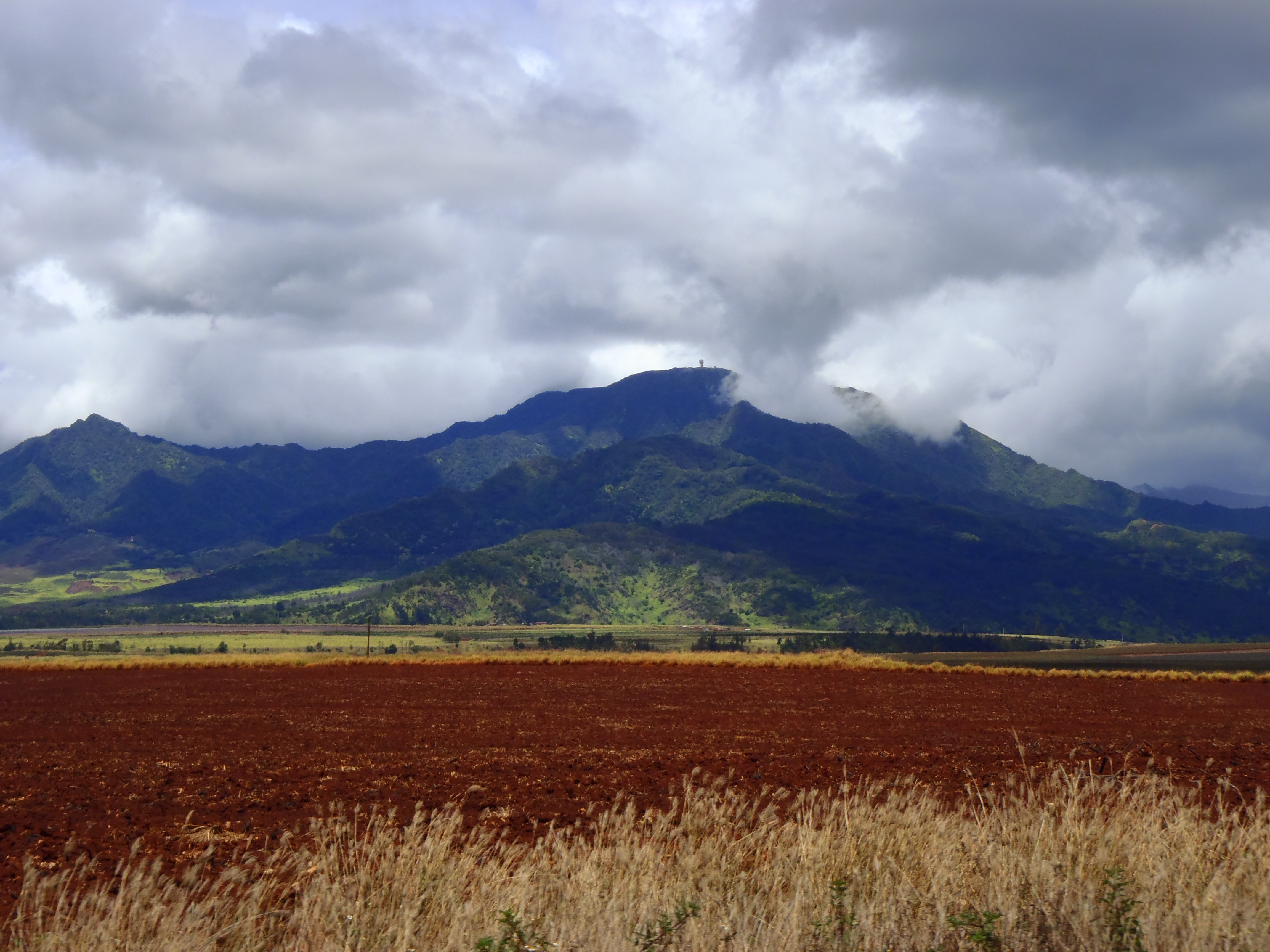
The agricultural area north of Honolulu on the drive to the North Shore.
Today was another long drive. I use the term “long” as a relative term, it was a total drive of about two and a half hours.
The first part of the trip was driving from Waikiki to the North Shore. I couldn’t pass up a chance to go and see it. Especially after seeing Honolulu and being pretty sure that Oahu wasn’t enough of a draw to bring me back to this island. The North Shore is pretty impressive, by far the nicest part of Oahu we have seen. Being a Sunday, the streets were lined with cars and people unloading paddle and surfboards, families having cookouts, and others just hanging around.

More remote and scenic than Honolulu, the North Shore would be easy to love.
The northern part of the island is definitely someplace worth visiting. There was simply too much congestion to park and explore anyplace and we weren’t really prepared for a beach visit since we were heading to the Dole Plantation afterwards.
There were boats moored, and lots of people in the water. The state park lot was full and people were double parked up and down both sides of the road, which still amazes me. I was wondering why every house had a rock wall or large fence in front, but it has to do with everyone parking on the side of the road to have access to the water. If you’re lucky enough to live in one of those houses, it seems like a fair trade.
This was the first time since we have been here when there was consensus that some of the homes were impressive. But very few. For the most part, even the houses right on the water, were in a noticeable state of disrepair. But then, I guess, if you have a beaten up house worth a couple million dollars, why would you spend the money to fix it up?
A field of pineapples.
The visit to the Dole Plantation was a unique experience. It isn’t often that you get to visit the place where an empire began. The plantation started as a roadside stand where Jim Dole sold the pineapples he grew. (Side note, pineapples are not native to Hawaii, they are from Brazil and spread through Polynesian at the hands of Spanish explorers.) His pineapples became so sought after that he eventually began canning them, then he bought an island and turned it into a larger operation involving many other fruits and products. Today, the plantation is the Disneyland of tropical fruit.
There is a Pineapple Express train ride around the plantation where you can see examples of the different fruits and activities on the plantation. All the while being supplied historical information through a narrator, which was intermixed with horrible songs about pineapples and other fruit by some local band. Shockingly, the band’s album is only available in the gift shop. I know why.
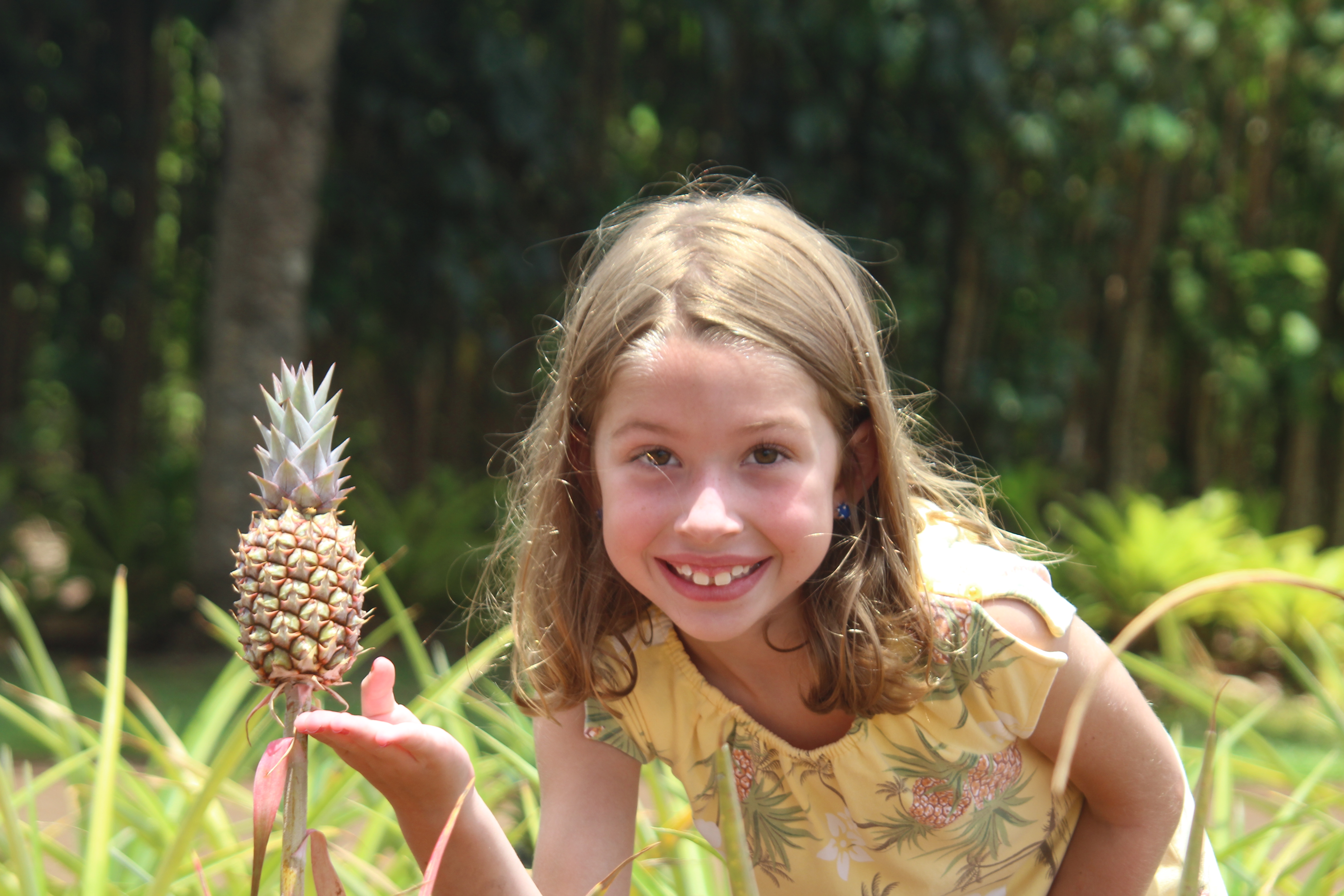
Tiny pineapples are just as tasty as big ones.
Once off the train, you can walk through a little garden with lots of different types of pineapples. Many different shapes and colors, and from lots of different places. At this point I was starting to feel like Jim Dole was the Bubba Gump of pineapples. It was all interesting, but I struggled to take it seriously.
From there we grabbed lunch at the snack bar, which was surprisingly good. We also took the opportunity to sample a “Dole Whilp” which turns out to be essentially pineapple flavored soft serve. It was pretty great, although Chloe, our resident pineapple fan, claimed that it was too strong. Whatever, she kept eating it after criticizing, so it couldn’t have been too bad.
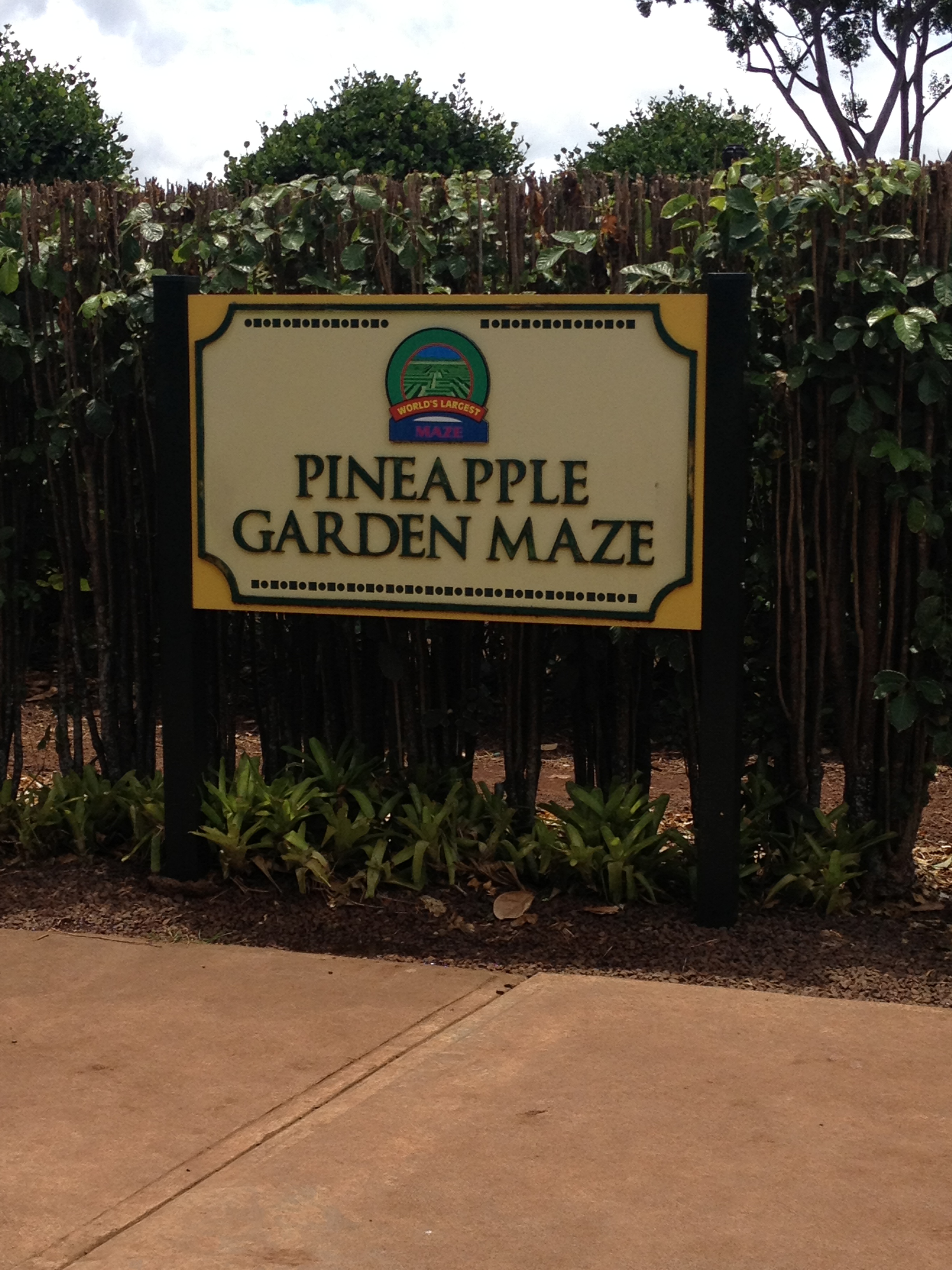 Once we finish lunch, it was off to the Maze. Being from the northeast, I’m used to corn mazes. This was another step. We were about to step into the world’s largest maze, according to Guinness in 2008. Um, I’m not arguing. The thing was massive. Huge rows of hedges which didn’t allow peaking, and eight stations to find to collect little stencil marks to prove you were there. Reportedly the record through the maze is six minutes. After 48 minutes I was tired, sweaty, a little bit motionsick from the turning, and I had six stencils. But I also had a life and other things to do, so I called it. It was cool, and the kids enjoyed it, but it tired to the point of near meltdown. That wasn’t worth hunting for the last two stencils.
On the trip back to the hotel I couldn’t help but think about how this man Dole had created a vast food empire from a fruit stand in the uplands of Oahu. Granted it was a different time, but realistically, he wasn’t the only pineapple guy on the block. Agriculture was, and continues to be, a large part of Hawaii’s economy, number two behind tourism, but ahead of Defense Department spending, which given the size of the military installations here, is impressive. Instead of Dole, I had to wonder about the guy with the next fruit stand over and how close we came to having Jones bananas in the grocery store instead. The man was clearly something special, and even if he was able to buy some of the world’s most expensive real estate to grow fruit 50 years ago, he likely would have found some way to be successful.
He could have just sold Dole Whips. Because they are well worth the drive.
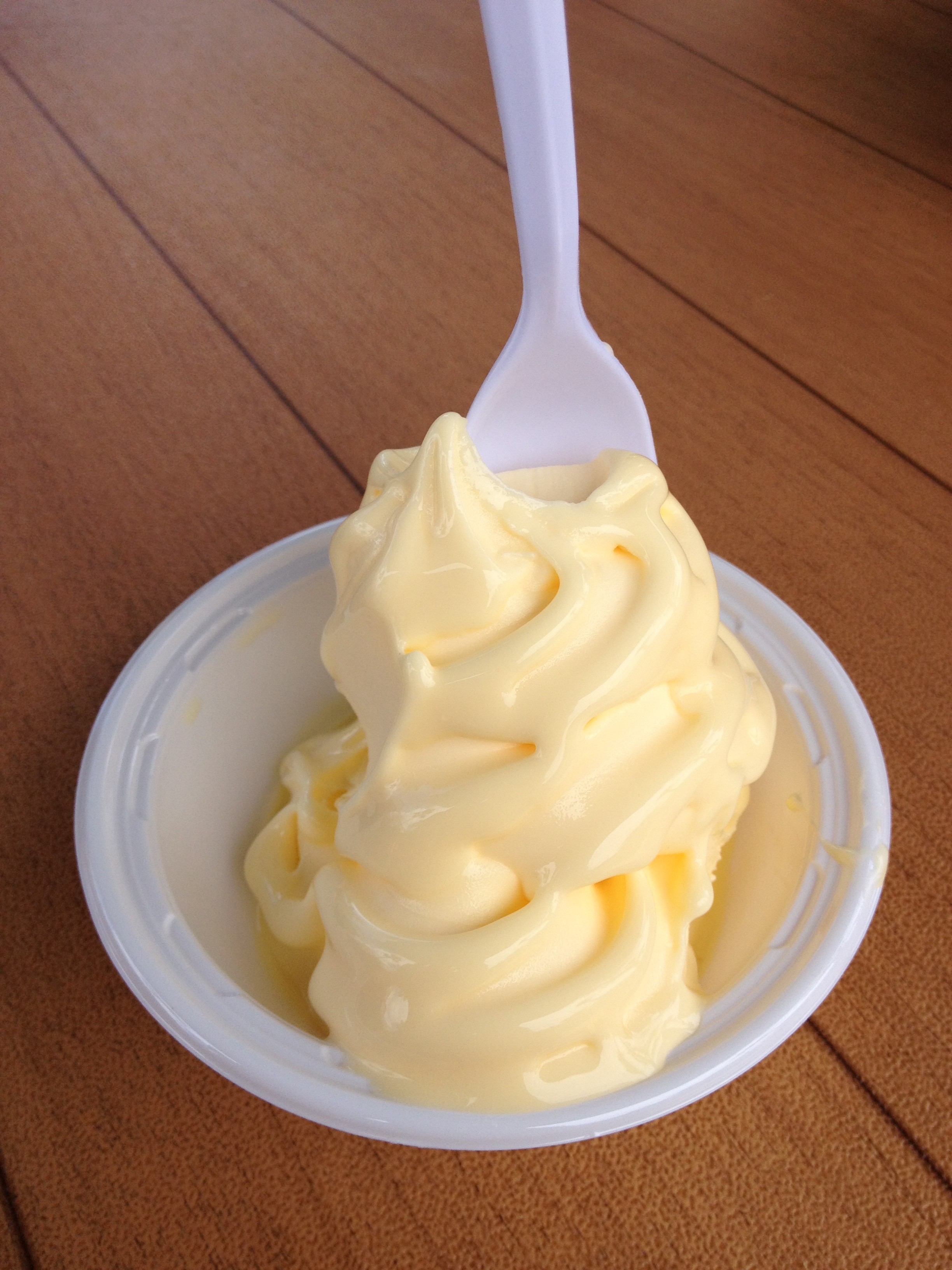
Pretty fantastic.

 The Life and Times...